
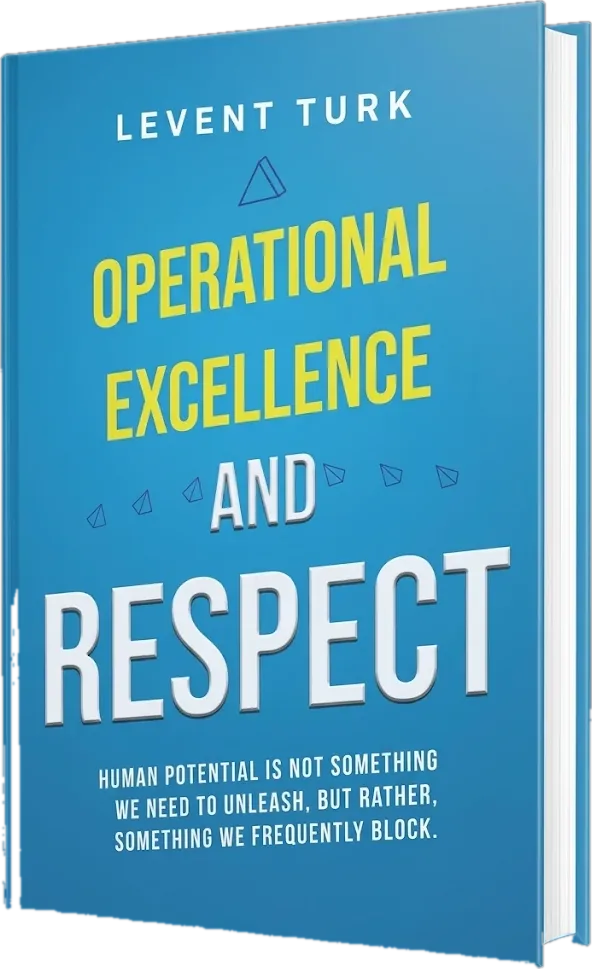
Human potential is not something we need to unleash,
but rather, something we frequently block.
Not learning and applying. Unlearning and abandoning.
What if I told you Operational Excellence is not about learning and applying, but unlearning and abandoning?
One-size-fits-all strategies, management and production systems try to impose their behavioural codes. The results could only be perfect if employees were machines that worked according to preloaded software. However, people act by their feelings. They feel depending on how they think, and think according to their desires and beliefs.
Systems often ignore humans and try to drive their behaviour. But to realise the true potential, we must understand the human condition and use the non-productive energy that systems like Lean and Six Sigma cannot see or eliminate. If systems cannot measure the problems they create, they cannot reach excellence.
Developing a Toyota-like culture takes decades. Still, there is a way. With a combination of Western philosophy, psychology and neuroscience, the book decodes the secrets of Operational Excellence from the experience of a former Toyota General Manager who learned TPS in Japan and implemented it in several automotive manufacturers. Instead of telling you what to do for probable success, it shows what not to do to avoid guaranteed failures.
Five parts. One principle.
The book moves from individual behaviour to values, to what people need from work, to the systems that shape behaviour, and finally to what operational excellence demands of leaders.
- PART IBehavioursCompetitive advantage, sustainability and change, the role of workplace culture, capacity versus potential, and a model of behaviour.
- PART IIValues and behavioursWhat we respect and why: respect as behaviour, respect as an attitude, self-respect, and the respect principle.
- PART IIIHuman and lifeHappiness and unhappiness, the economy of life energy, freedom, order and fear, worthlessness, and turning anger into success.
- PART IVBehaviours and systemsHow systems drive behaviour and behaviour drives systems: standardisation, daily management, suggestion systems, multi-skill development and on-the-job training.
- PART VOperational excellenceValues, judgement and problem solving, toxic workplace culture, culture, strategy, the will, and results.
“Early in this book, Levent Turk grabs this error in thinking and nails it to the wall with this line: Human potential is not something we need to unleash, but rather, something we frequently block… the rest of the book just gets better from that point forward.
If this were the book we’d inherited in the 90s, maybe we would now be surrounded by leaders who realise a high-performance culture is more to do with their own beliefs in what good looks like and the conditions they create for human brains to survive in, and not about training tools and tracking KPIs.
What others take a whole book to say, Levent Turk captures in a single paragraph or sentence. This is a book of a 1000 books.”
Levent Turk
Levent brings more than 30 years of hands-on senior leadership. He spent 16 years at Toyota, as production General Manager, Quality General Manager and TME country president, then led Lean transformations as a board member at Karsan and MAN Truck & Bus. Today he is a partner in BTFA.
More about Levent and David →Respect for People, in practice
BTFA gives leaders a working model of how belief drives behaviour: the human layer beneath Lean. Read the Lean leadership guide, or see the Lean Leadership & Operational Excellence programme.
Buy on Amazon